Choosing a first toy for a baby
What to look for in the very first toys — and why simpler often wins.
The first toys a baby owns are quietly important. They set the tone for what play feels like — and at this age, less is almost always more.
One sense at a time
For very young babies, a single clear input beats a busy multi-sensory toy. A gentle rattle or a soft musical toy with one sound is easier to focus on than something that lights up, sings and vibrates at once.
Easy to grip
From around four months babies start grasping intentionally. A toy with a thin handle or a textured surface gives them something to practise on. Rounded edges, no small parts, and a weight a small hand can manage.
Easy to clean
Everything goes in the mouth eventually. Wipeable materials, no porous fabrics for the first stages, and nothing with batteries inside a soft pocket are all good defaults.
Cause and effect
Around six to nine months babies start to learn that their action makes something happen. An interactive toy that rattles or bops when pressed teaches that lesson better than any screen.
The honest truth about quantity
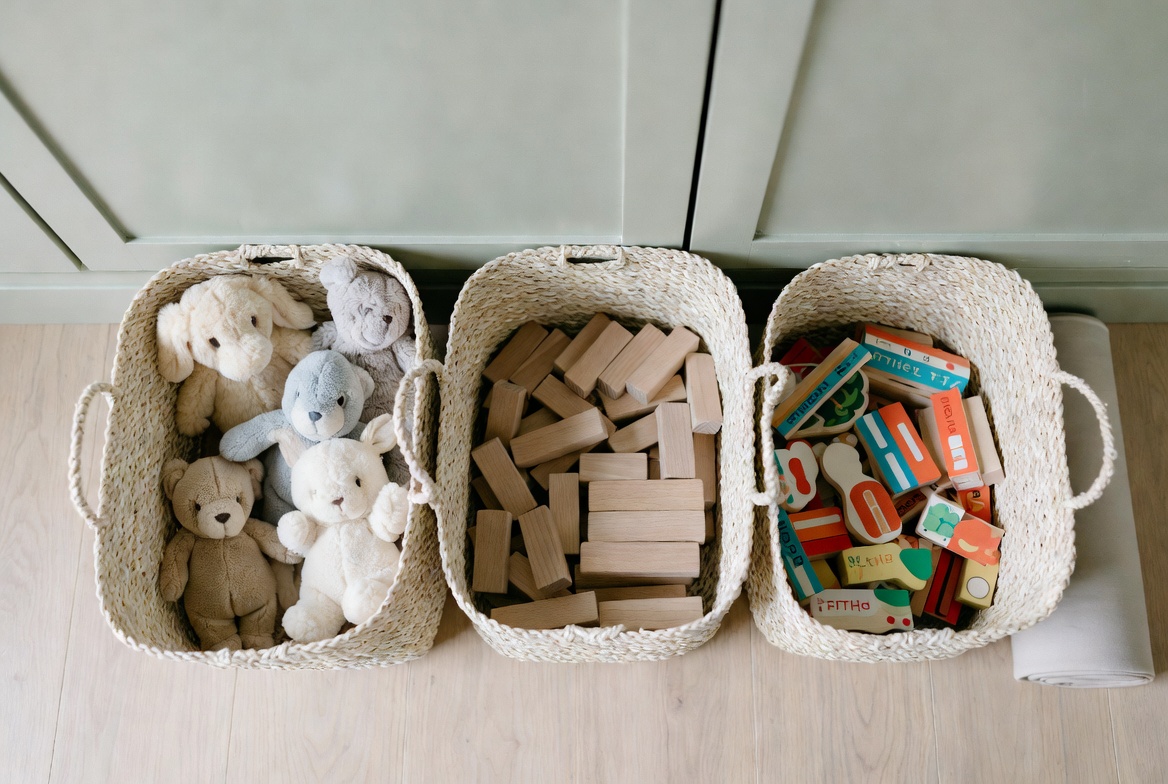
Three good toys, rotated, beat fifteen on a shelf. Babies don't get bored as quickly as we expect — they go deep on the same item for weeks.