Pretend play kitchen: where to start
A simple starter kit for a child's play kitchen — the few pieces that actually get used every day.
If you've ever watched a four-year-old serve you a plastic egg on a wooden tray, you already know that a pretend kitchen does more than entertain. It teaches sequencing, vocabulary, sharing and a quiet kind of patience. The trick is starting with the right handful of pieces — not a hundred.
The starter five
You only need five things to begin. A small play kitchen or cooker, a pan or cookware set, a basket for "groceries", a handful of food pieces, and one cup or bottle for serving. Anything beyond that can wait until you see what your child reaches for most.
Pick food they recognise
Children play harder with food they actually know. A pretend banana, a yogurt pot, a slice of cheese — these get pulled out daily. Niche items (a fancy dessert tower, an unusual fruit) often sit on the shelf untouched.
Add a "shop" element
Once the kitchen routine is established, a small shopping bag or picnic basket turns cooking into shopping-then-cooking, which can double the play time. The same toys, doing two jobs.
Where to store it
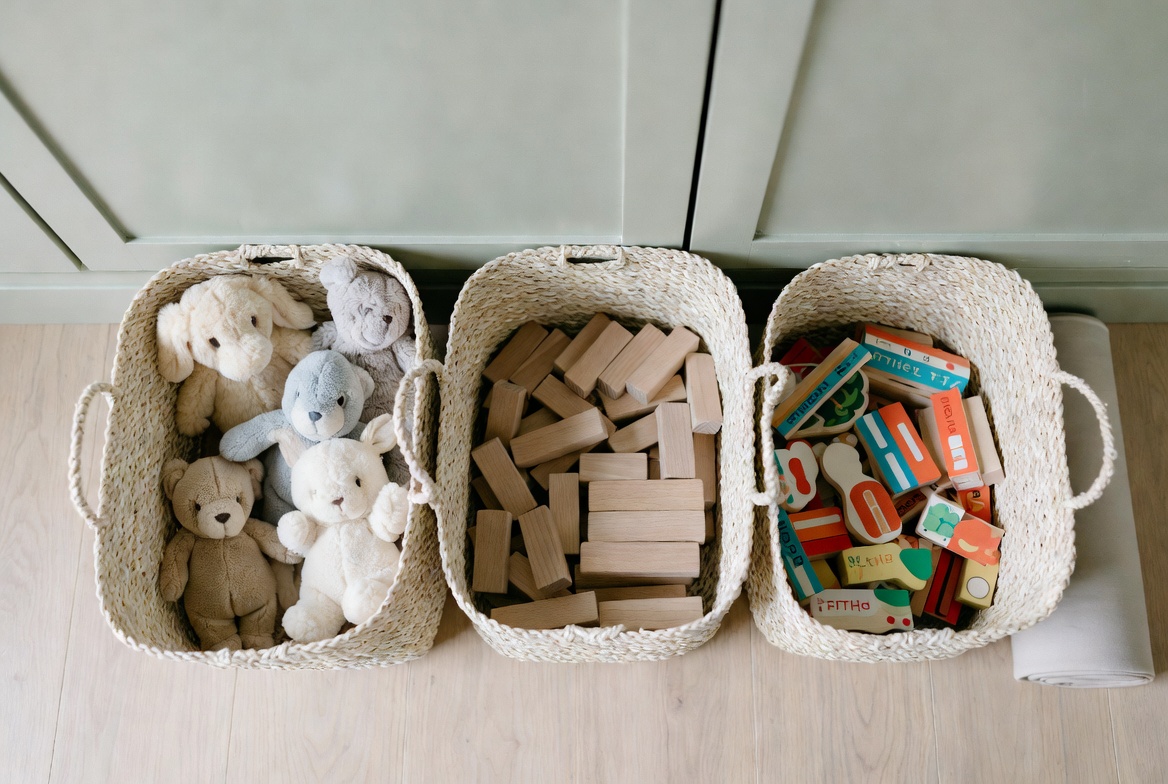
A low storage basket within the child's reach beats a cupboard at adult height. If they can put it away themselves, they will. If they can't, you will — every evening.
One last tip
Rotate. Keep half the pieces out, half hidden in a box. Swap every few weeks. Children re-discover their own toys as if they were new — and the play stays calm because there's less on the table.